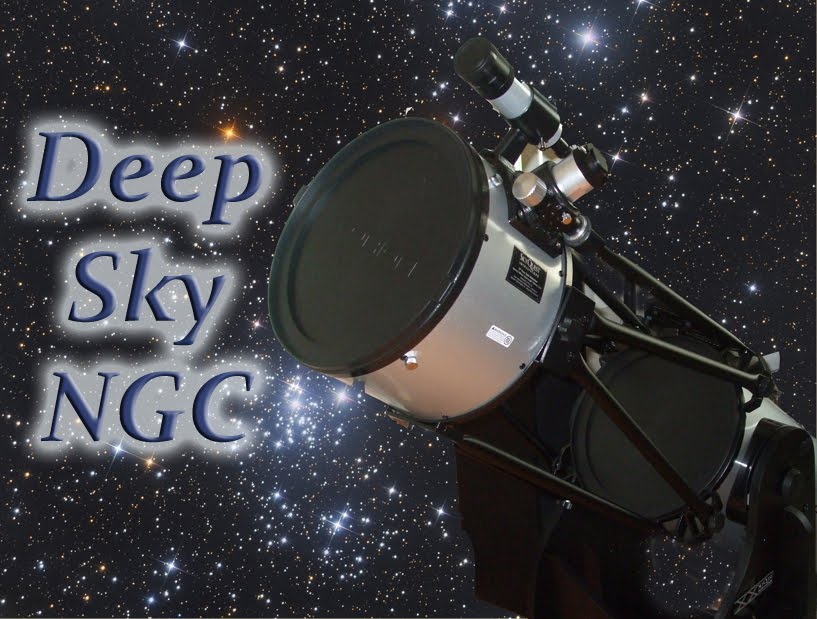
2026 has been one of the worst years for clear skies between last quarter and first quarter moon. In fact, it's been horrible. The lone exception has been October, where I was able to snag five great nights of observing, totaling over 21 hours at the eyepiece. I don't mind missing out on July and August nights, as I have covered the summer skies in great deal many times over. But I desperately need access to early winter, spring and late autumn skies. I have been observing in Cetus with the 12" since 2013 and I still have so much to go. Part of the problem here is the low declination objects. I am nearly finished with the lowest Uranometria charts for Cetus, namely 157, 140 etc. A few more nights of work and I will be able to benefit from a higher declination, improving my chances at discovering faint galaxies without taking an hour of my precious time to do so. I am really hoping for a few good nights in November, and perhaps at least one usable one in December. Usually January and February are off limits due to cold temperatures, highly reflective snow on the ground and unfriendly winds.
To give some idea of how bad things have been here in Essex County, Ontario, up till October of this year I had put in 22 hours of observing. That occurred over 7 nights. 7 nights of good observing for 9 months! Good grief! Then came October with 5 nights and just over 21 hours of observing. See what I mean? Without October I would be in great despair right now. As to spring observing I only managed four outings. I will never complete the NGC list for Coma B. with that kind of cooperation from Nature. I will wait till December to post my object highlights for 2026. It won't be a long list. My October sessions always ended with views of Saturn this year, most of them exceptional and undertaken after midnight. It's rare for me to clearly see colour gradations on Saturn, but there they were. Mostly browns and yellows and greys, but impressive even so. And after a night of faint galaxy hunting I always enjoy views of something brighter afterwards, before Saturn. I must say that from my location on a clear night that NGC 253, the Sculptor Galaxy, always blows my mind. So does the huge globular south following the galaxy. Easily resolvable in my eyepiece, and stunning on a good night (the globular, not the galaxy!).
Turning now to Messier 4, I will present my notes here from observations with my Tasco 4.5" reflector (the mighty "Lunagrosso") that I used in the early to mid 70s, as well as my observations with the much mightier Edmund Unique 8" Reflector. Though I have observed it many times with the 12" reflector I have not officially logged M4. Usually in the spring I align my finderscope with Antares and often begin sessions with a look at M4. I will say that the object varies highly in quality due to sky conditions. On nights with high humidity it seems to have a faded glory, whereas on dry nights with good transparency it is a most remarkable and likeable globular cluster. It seems to resolve almost completely at 166x and higher in the 12". But I'm getting ahead of myself.

I'm turning the clock back to June 26th, 1976. It was a banner year for me. I married Deb in August and we moved away (to Essex County) to attend university in September. But on June 26th, during my 150th logged observation, I viewed M 4 in the Tasco 4.5". I actually had surprisingly little to say about it, so I'm guessing it may not have been a classic night of transparency. I quote: "M4 was next, a very fine globular group, situated in a scattered open cluster of resolvable stars. The globular itself was not resolvable, but very bright and seen best at 45x. Alpha, Sigma and M4 make an interesting triangle to trace out at lowest magnification. GC 6144 near Alpha could not be located."
Now we jump ahead to July 5th, 1996. On my 465th logged observation we viewed Scorpius with the 8" reflector (purchased in 1978 using some student loan money). My notes: "One of the main highlights of the early summer skies, this massive relatively close globular is resolvable through to its spiny core in a 20 cm glass. Even at very low power stars are popping out all around the object. It was viewed with complete success up to 254x, where stunning views of the core were had. The very center had a line of stars that resembled a small spine. This is a recommended object, resolvable in a 15 cm but glorious in a 20 cm. Not to be missed."
As to gc 6144, here are my 8" notes: "At first glance this object was very small and faint. Closer viewing as skies darkened enhanced this first opinion. Of moderate size and definitely not bright, tonight's excellent skies revealed a brighter star-like center, with some of the outer haze resolving into very faint members. Best views were at 112x using averted vision. Not recommended in less than perfect conditions. Tonight a 6" would have done well here."

https://skyview.gsfc.nasa.gov

https://skyview.gsfc.nasa.gov
Clear skies.
Mapman Mike
