It's been a while. I would write more blogs if I knew anyone was actually out there reading them. More comments would be nice as well. While the hit count for this blog is over 75,000, comments are few and far between. I am still an active visual observer, still using my Orion 12" Push To and Space Eye, my 2" refractor. I continue to chip away at the NGC list, as viewable from my location in Essex County, Ontario (42 lat. N.). Every two years at this time I update my print list and recount how deep sky objects have been seen. Here are the latest totals:
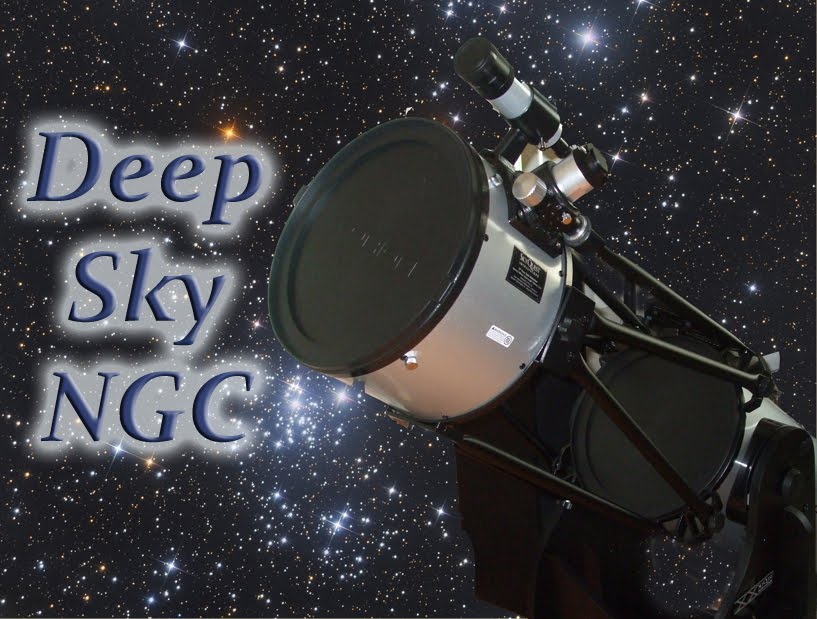
I have been an amateur astronomer since 1968. I hope to share suggestions on making observing sessions more pleasurable and rewarding. I will also share my experiences and descriptions of observations, including my relentless pursuit of NGC objects. Any topic of interest to amateurs may be found here, especially suggestions from readers. Most of my observations are done with an Orion 12" Dobsonian.
Showing posts with label IC. Show all posts
Saturday, 28 February 2026
#152: NGC Count Update
NGC: 3045 objects viewed and logged.
IC: 540 objects.
Other Catalogues (every other deep sky catalogue): 985.
My grand total of deep sky objects viewed and logged currently stands at 4590. That does not include double stars, which I enthusiastically view but do not keep count. I am hoping to get back to the eyepiece in March. It has been a brutally cold and severe winter this year since mid November (my last observation) through February. It seems that cold weather will continue on into early March.
If and when I get back out there I will continue detailed work in Puppis, then continue on with Crater. By late March I should be able to resume in Coma. For the first time in my life I plan to tackle part of Virgo! Aside from the major Messier I have done no official work in this constellation. It took me 7 years to get through Leo, and it will take me at least that long to get through Coma. Of course if I had access to more clear nights.....
Mapman Mike
Tuesday, 27 February 2024
#148: NGC List Update
It has been a long time since I actually counted my personally observed and logged NGC list. When I acquired the 12" scope back in 2013 I decided to try and view as many of the list available to my location (42 N Lat.). It turns out that more than half of the 7800+ objects are viewable from where I am. Obviously I will not get through more than 4000 of them. Will I? To reach a reasonably dark sky I now have to drive 38 miles from home. So nearly 80 miles round trip. Readers can imagine how happy I am when I get out there only to find that the forecast doesn't pan out, and it is cloudy. It happens, and is all part of the game. Try to outwit the sky conditions, and predict when I might get some work done. I consider 10 objects, including double stars, to be a minimally decent enough night, or 5 deep sky objects. I always aspire to 20 or more, which makes the drive worthwhile. Nearly two hours of driving to get in 3 hours of observing. Though often I could stay longer, my eyes usually tire after 3 hours.
This February 2024 has been the warmest in my astronomy career. I managed to get out four times and do some great deep sky and double star work. When that last session was complete I finally tallied my object list. I do not maintain a count of the hundreds and hundreds of double stars I have seen, but I do of deep sky objects. Here is my life total to date:
NGC objects: 2779 (!!!).
IC objects: 416.
Objects from other catalogues: 817.
Total deep sky list: 4012.
All objects are indexed, and I can find any object in my notes quickly and easily. The ones I have seen are also underlined in red in my Uranometria atlas.
And a major milestone is rapidly approaching. To date I have logged 989 observing sessions! With luck and clear skies, I will reach my 1000th observation session sometime this spring! I plan on baking a cake for that occasion. What will I do on my 1000th observation? Carry on with the great work.
Mapman Mike
Tuesday, 22 July 2014
#50 Summer Observing Plans, 2014
With spring galaxy season officially ended (for me it finally ended last night, when I logged a tiny, faint one in Bootes), it is time to bring on the summer milky way and all of the awesome areas of sky contained within. Last summer I enjoyed quite a lot of clear skies, and was able to begin and finish detailed deep sky observations of Lyra and Cygnus, as well as nearly finish Cassiopeia. The summer constellations are "up there" a lot longer than those of any other season, thanks to the increasing level of darkness creeping back into our lives. Combined with generally nicer weather, many of us spend entire nights observing in July, August, and September. I have already observed most of the summer sky with my previous 8" scope, and I am now having another go with my 12".
My summer plans include observing all of the NGC and IC objects in Aquila, Delphinus, and Sagitta, and also getting a start in Sagittarius. Hundreds of deep sky objects await, many of them completely new to me. I have also included all of the open clusters from other catalogs shown on Uranometria 2000, as well as the occasional globular cluster and planetary nebula. My main goal, however, is the NGC list. Double stars are not forgotten, as I will go back and review some of the best ones seen previously, along with several I could not split with the 8", or could not find back in the day. Refer to my earliest blogs for exactly how I go about setting up my observing lists. It's an old-fashioned way, but keeps me entertained for hours on cloudy nights and weekends.
I've already had a good start in Aquila, logging four open clusters last night, including 6709. There are also three (less impressive) clusters in the immediate vicinity. However, by star hopping to them from 6709 I got to see a lot of lovely star fields, and got to know another small part of the sky very well. On previous nights I viewed oc 6755 and 6756, along with other open clusters, a few globulars and planetaries, a variable star and a double. Since I spent April, May and June hunting down (mostly) faint galaxies, it is pure joy to behold the wonders of the Milky Way once again. I especially like viewing open clusters, and the 12" has revealed them to me in ways only that level of aperture could. 6709, for example, is a minor treasure in my scope, and I spent a very long time last night enjoying the sight. I began at 43x, and slowly worked my way up to 200x, stopping off for lengthy views at 60x, 83x, 100x, 125x, 150x, and 187x. Each view gave a new perspective, and it was like arriving amidst the cluster in a spaceship, having begun some distance away. Once deep inside the cluster, I pulled away again and enjoyed low power views. Believe me, this is a fun way to spend a night! Afterwards, once the notes are in the logbook, I go back and compare what I saw now with what I saw years ago with the 8".
My wife and observing partner, Deb, has her own method of tracking down deep sky objects. Deb now has about a year of solo observing under her belt, after assisting me with sketches at the eyepiece for decades. She started with our Astroscan 4 1/4" RFT, locating all of the Messier objects to boost her driving and hunting skills. Once she had completed that project, she upgraded to an Orion Starblast 6". That is one fine little telescope, with some of the sharpest views of stars and deep sky objects I have ever seen. It more than holds its own against all the super expensive 5" refractors that come out to the observatory to observe. It's only drawback is that it does not accept 2" eyepieces.
Right now Deb is completing her NGC globular cluster project. Previous to this she took on Spring galaxies. Her next project, just currently getting underway, is finding open clusters within a specific size and magnitude. Basically she observes a large selection of objects in one category (galaxy, open, or globular cluster) and does a comparative study. She observes each object with the same three eyepieces, comparing size, brightness and ease of finding and seeing the object. So she is now an expert observer of galaxies and globular clusters using a 6" reflector.
Because we travel to the observatory in one vehicle, and because my 12" scope takes up a lot of the cargo room, Deb is limited to a 6" aperture, though she is often more than happy to take a peek through the 12". Sometimes we have fun by observing the same object at the same time in both scopes, comparing the views.
As always, I am interested in hearing about other observing methods. Just remember to have a peek at what else may lie around that deep sky object you are looking at, especially if it lies in the Milky Way. Star chains, small but colourful double stars, tiny asterisms... it's fun to be surprised by uncateloged, undiscovered wonders, too. Happy summer observing!
Mapman Mike
Thursday, 22 August 2013
#29: Cygnus: A Deep Sky Prelude
With Lyra completed and summer constellations moving forward less and less each night due to shorter days, I have taken up the task of viewing the deep sky objects of Cygnus. Later during the night I will switch over to Cassiopeia, but first I thought I would give an idea of what Cygnus has to offer for someone with a 12" mirror.
My first and primary goal is to view all of the NGC and IC objects. However, Cygnus is loaded down with "other" objects as well, mostly open clusters from different catalogues. I will briefly discuss each main category, beginning with the NGC.
There are 57 NGC objects in Cygnus. 33 of them are open clusters. While I have seen many of them with my previous telescope (8"), there are quite a few new ones for me to observe. Things I have seen previously should look considerably different in my larger mirror. In addition to the clusters, there are 9 planetary nebulae, 8 galactic nebulae and 7 galaxies. M 29 and M 39 are also included in this NGC list. Even this many objects could keep an observer happy for many viewing sessions. It is doubtful I will get through them all this summer.
There are 16 IC objects in Cygnus. 6 are galactic nebulae, 5 are galaxies, 4 are open clusters and 1 is a planetary.
Finally come the other catalogues, mostly open clusters from Berkeley, Collinder and several others. 57 of these other objects are open clusters, many of them very small and faint, and truthfully probably worth just a quick glimpse. There are 2 planetaries and 1 galactic nebula. I have decided to largely pass on the PK planetaries, at least for this season.
In total, I will be viewing 132 deep sky objects in Cygnus. 94 are open clusters, 14 are galactic nebulae, 12 are galaxies and another 12 are planetaries. I have mixed in a number of double stars as well. All of the objects are plotted and named on Uranometria All-Sky Edition, though the double stars are mostly unnamed in there.
I already have a small start on Cygnus (see previous post), and am impatiently awaiting the time near last quarter moon when observations will get underway again. With darkness falling a bit earlier now, even more time can be spent at the eyepiece if it is clear. My next post will be a similar brief look at upcoming deep sky objects in Cassiopeia.
Mapman Mike
My first and primary goal is to view all of the NGC and IC objects. However, Cygnus is loaded down with "other" objects as well, mostly open clusters from different catalogues. I will briefly discuss each main category, beginning with the NGC.
There are 57 NGC objects in Cygnus. 33 of them are open clusters. While I have seen many of them with my previous telescope (8"), there are quite a few new ones for me to observe. Things I have seen previously should look considerably different in my larger mirror. In addition to the clusters, there are 9 planetary nebulae, 8 galactic nebulae and 7 galaxies. M 29 and M 39 are also included in this NGC list. Even this many objects could keep an observer happy for many viewing sessions. It is doubtful I will get through them all this summer.
There are 16 IC objects in Cygnus. 6 are galactic nebulae, 5 are galaxies, 4 are open clusters and 1 is a planetary.
Finally come the other catalogues, mostly open clusters from Berkeley, Collinder and several others. 57 of these other objects are open clusters, many of them very small and faint, and truthfully probably worth just a quick glimpse. There are 2 planetaries and 1 galactic nebula. I have decided to largely pass on the PK planetaries, at least for this season.
In total, I will be viewing 132 deep sky objects in Cygnus. 94 are open clusters, 14 are galactic nebulae, 12 are galaxies and another 12 are planetaries. I have mixed in a number of double stars as well. All of the objects are plotted and named on Uranometria All-Sky Edition, though the double stars are mostly unnamed in there.
I already have a small start on Cygnus (see previous post), and am impatiently awaiting the time near last quarter moon when observations will get underway again. With darkness falling a bit earlier now, even more time can be spent at the eyepiece if it is clear. My next post will be a similar brief look at upcoming deep sky objects in Cassiopeia.
Mapman Mike
Subscribe to:
Posts (Atom)